Leather, Felt or Foam: What a Ball’s Outer Layer Does
Leather, felt or foam changes a ball’s touch, grip and response; learn what each outer layer is designed to feel like and why it can seem wrong.
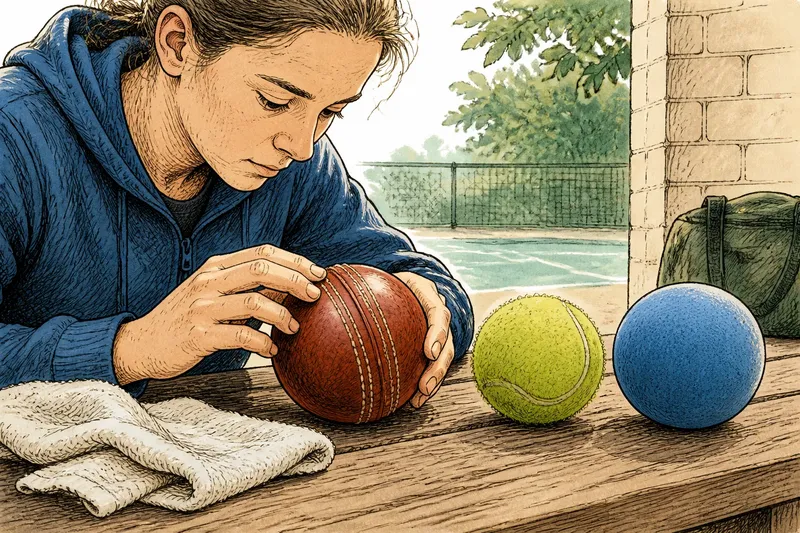
The common mistake with a ball that feels wrong is to blame its size or pressure before noticing the surface. Leather, felt or foam can make a ball seem slick, grabby, soft or abrupt even when its shape is familiar. Understanding the outer layer helps explain that first impression without turning material into a simple ranking.
Start with the surface, not the ball’s name
A ball’s outer layer is the part a player touches, catches or strikes, but it is not always a single, obvious skin. It may be a cover bonded to an inner structure, a textile wrapped around a core, or a soft exterior that also supplies much of the ball’s cushioning. The material and its construction work together, so two balls described with the same material can still feel different.
Surface character is more than softness. It includes texture, friction against skin or clothing, the way the cover yields under a hand, and how readily it changes during play. A smooth synthetic cover, for instance, may feel firmer than textured leather, while a felted surface may feel soft to the touch yet resist a clean slide across a court.
That distinction matters because a player often reads touch as information. A cover that catches the fingers can make a ball feel secure in a grip; a slicker one can make release feel cleaner or less predictable. Neither impression tells the whole story about the ball’s intended behaviour, but both help explain why a familiar game can feel different with another ball.
Leather gives a defined, changing contact
Leather is associated with a distinct grain and a surface that can feel supple without being plush. The contact tends to register clearly in the hand: a player can sense the seams, the texture and the firmness beneath the cover. That quality suits sports and traditions in which handling the ball is part of its recognisable character.
Leather is not a single texture. Grain, finish, panel construction and the way the material is treated all affect grip and softness. A smooth finished surface may feel quite unlike a pronounced pebbled grain, and a seam can be more noticeable than the leather itself. The label therefore says less than the actual surface under the fingertips.
Natural material can also respond to its surroundings and use. A leather cover may feel firmer or more yielding as it conditions, and dampness can alter its grip and handling. Those changes are not necessarily defects; they are part of why a leather ball can acquire a particular feel over time. The relevant care and playing conditions depend on the maker’s instructions and the rules of the sport.
When leather feels unexpectedly harsh, the cause may be a stiff finish, prominent seams or a ball that has not softened through ordinary use. When it feels slippery, the surface may be smooth, polished by handling or affected by moisture. Treating every such sensation as a pressure problem can lead to adjustments that do not address the real source of the discomfort.
Felt adds a textured layer between hand and core
Felt changes the contact by placing fibres between the player and the ball’s underlying structure. The surface often feels soft and slightly fuzzy, with friction that is distributed across the nap rather than concentrated in a smooth skin. On a court, that texture can also interact with the playing surface, affecting how the ball meets it and how the bounce is perceived.
Felt is not simply a cushion. Its fibres can lie in different directions, flatten with use or collect surface debris. A fresh cover may feel more uniform, while a worn patch can feel smoother or less consistent under the hand. The ball may still be usable, but its familiar touch can change, especially when the difference is visible across one area rather than the whole cover.
Players sometimes mistake that altered feel for a change in the ball’s core. Yet the outer layer can influence handling before the core becomes relevant to the sensation. A ball that seems to drag against the fingers may have a raised or matted nap; one that slips more readily may have a flattened surface. Looking across the cover in good light can help distinguish these possibilities.
Felt also illustrates why a material cannot be judged in isolation from its setting. A fuzzy exterior that feels comfortable in the hand may gather dust or respond differently on another court surface. The playing environment is part of the ball’s surface character, not a reason to assume that every variation comes from a fault.
Foam makes softness the most immediate feature
Foam covers and foam-bodied balls are commonly associated with a yielding touch. Pressing or catching one can feel less abrupt than contact with a firm leather or tightly woven cover. The softness may make the ball easier to receive comfortably, but it also changes the character of impact: the surface gives under contact instead of presenting the same crisp response.
The word foam covers many constructions. Some balls have an exposed foam surface; others use foam as part of a layered exterior or a lightweight core beneath a skin. Texture, density and the thickness of the yielding material affect what the hand notices. A smooth foam surface can feel different from a textured one, even if both compress readily.
Because foam can deform visibly under pressure, people may read every indentation as damage. A temporary impression that settles back can be part of how a soft material responds, while a tear, persistent split or area that no longer returns to shape suggests a different problem. The maker’s care guidance is more useful than judging by softness alone.
Foam’s gentle contact can also be mistaken for a lack of control. That judgement depends on the sport, the ball’s construction and the player’s expectations. A ball designed to feel forgiving will not necessarily reproduce the sharp touch of a firmer cover; the difference is a feature of its intended character, not automatically a sign that one material is superior.
Diagnose a surface problem before changing anything
When a ball feels unlike the one a player expects, work from the visible and tactile clues towards the less obvious ones. Keep the assessment descriptive: notice where the surface feels different, whether the change is local or uniform, and whether it appears only in particular conditions. This avoids treating every unusual touch as the same fault.
- The ball feels slick. Look for a polished or smooth area, moisture, or flattened fibres. If the surface is uniformly smooth, the material or finish may simply offer less friction than expected.
- The ball catches the fingers. Check for a pronounced grain, raised seams, rough patches or a lifted nap. A local snag points more towards surface wear than a general change in the ball’s feel.
- The ball feels harsher than expected. Notice whether the cover is stiff, the seams are prominent, or the ball is simply firmer in construction than the player anticipated. A change in surface softness and a change in the ball’s overall firmness are related sensations, but they are not identical.
- The surface feels uneven. Compare the area around the ball by sight and touch. A flattened felt patch, damaged cover or unevenly worn section can produce a local difference, whereas a consistent texture is more likely to be the intended finish.
- The ball feels different in damp or dusty conditions. Consider what has settled on the surface and whether the material is responding to moisture. Let the ball return to suitable playing conditions before deciding that its normal character has changed.
Say a player expects a fuzzy court ball but finds that one side feels smooth and slips during handling. They inspect it under a bright indoor light, notice that the nap is flattened on that side, and compare the rest of the cover rather than squeezing the ball or blaming its core. The visible patch gives them a plausible explanation for the uneven touch; the next decision is whether the ball remains suitable for their session, not whether felt is inherently a poor surface.
Why does the same ball feel different?
Does leather always provide more grip?
No. Grain, finish, moisture and wear all affect the sensation of grip, and a smooth leather surface may feel less secure than a textured alternative. Grip is a property of the particular surface in its conditions, not a universal result of the word leather.
Does felt make a ball softer?
Felt often feels soft because its fibres cushion the immediate contact, but that does not mean the whole ball is soft or compressible. The layer can alter friction and texture while the underlying structure remains relatively firm.
Is foam always the gentlest-feeling option?
Foam commonly yields under touch, yet the sensation depends on its density, texture and the way it is combined with other materials. A firm foam surface may still feel more yielding than a hard cover, but not every foam ball has the same degree of softness.
Can a worn surface change how a ball handles?
Yes, wear can flatten fibres, polish a cover or expose a rough patch, changing how the hand meets the ball. The effect may be local rather than a complete transformation, so inspect the surface before attributing a changed feel to the ball’s whole construction.
Choose words that describe the feel accurately
When comparing balls, descriptions such as “grainy”, “fuzzy”, “slick”, “yielding” and “firm” are more useful than calling one material simply good or bad. They separate what the hand senses from what a player expects the ball to do. A material name is a starting point; the cover’s finish and condition complete the description.
That language can also make conversations about equipment more precise. Instead of saying that a ball is wrong, a player can say that its cover catches at the seam, that its nap feels flattened, or that its foam yields more than expected. Those observations narrow the cause without pretending that touch alone settles every question about suitability.
Leather, felt and foam each set up a different relationship between hand and ball: defined contact, fibrous friction or yielding softness. If leather, felt or foam seems unfamiliar, first identify the surface quality and the conditions around it; that small distinction is often enough to explain the sensation without turning a descriptive difference into a buying prescription.